

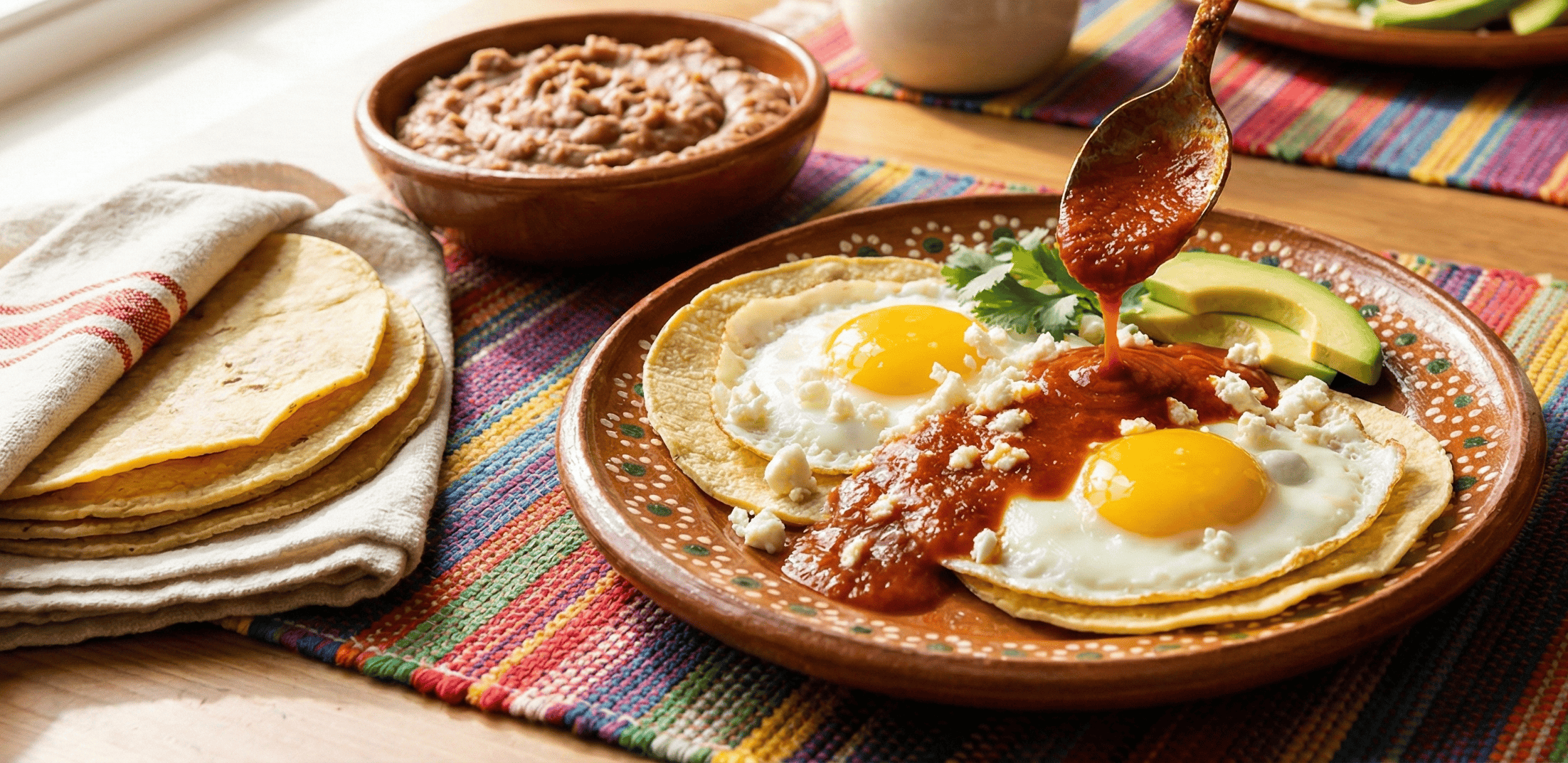
The first time I had real huevos rancheros was at a small fonda in Oaxaca. The plate arrived with two fried eggs perched on crispy tortillas, blanketed in a rust-colored sauce that smelled of roasted tomatoes and dried chiles. Refried beans on the side, a scattering of queso fresco, and a stack of warm tortillas wrapped in cloth. It was 9 AM and easily the best meal I had eaten in days.
What struck me was how different it tasted from the versions I had ordered at brunch spots back home. American huevos rancheros often arrive as a pile of scrambled eggs drowning in jarred salsa, served on a flour tortilla with sour cream and cheddar cheese. Edible, sure, but missing the point entirely. The authentic version is simpler, more intentional. Each component matters.
This recipe recreates that Oaxacan breakfast. Corn tortillas fried until the edges crisp. Eggs with runny yolks that mix into the sauce when you cut them. And a proper salsa ranchera made from tomatoes, dried chiles, and garlic, simmered until it thickens into something that tastes like it took hours but actually comes together in twenty minutes. This is breakfast worth making time for.

What's So Special About Huevos Rancheros
Huevos rancheros translates to "rancher's eggs," a name that speaks to its origins as a hearty rural breakfast meant to fuel a morning of work. The dish is built in layers, each contributing something essential.
The tortilla at the base should be lightly fried, soft enough to cut with a fork but with edges that have turned golden and slightly crisp. This texture matters. A soft, steamed tortilla turns soggy under the sauce. A properly fried one holds its structure and adds a toasted corn flavor that complements everything above it.
The eggs sit on top, fried sunny-side up or over-easy so the yolks remain liquid. When you cut into them, the yolk runs into the sauce and creates a rich, silky mixture that coats each bite. The whites should be set but still tender, not rubbery.
The salsa ranchera ties everything together. It is not a fresh salsa or a chunky pico de gallo. Ranchero sauce is cooked, simmered until the tomatoes break down and the flavors meld. It should be slightly thick, able to coat the eggs without pooling into a watery puddle. The flavor balances bright tomato acidity with the earthy warmth of dried chiles and a hint of smokiness.
What Goes in Huevos Rancheros
The ingredient list is short, but each element plays a role:
For the Salsa Ranchera:
- Roma tomatoes form the base of the sauce. Roasting or charring them first concentrates their flavor and adds sweetness. Roma tomatoes have less water and more flesh than other varieties, producing a thicker sauce.
- Dried guajillo chiles contribute mild heat, fruity undertones, and the characteristic rust-red color. They are not very spicy, mostly adding flavor and depth.
- Dried ancho chiles (optional) add a subtle smokiness and richer, more complex flavor. Using a mix of chiles creates more depth than a single variety.
- White onion provides sweetness and body. Charring it along with the tomatoes deepens the flavor.
- Garlic adds savory depth. Roast it with the other vegetables for a mellower taste.
- Cumin contributes earthiness. A small amount goes a long way.
- Chicken or vegetable broth thins the sauce to the right consistency and adds another layer of flavor.
- Salt balances and enhances all the other flavors.
For Assembly:
- Corn tortillas are traditional. Use fresh tortillas if available. Flour tortillas are not authentic but can substitute if needed.
- Eggs should be fresh for the best whites and yolks. Room temperature eggs fry more evenly than cold ones.
- Vegetable oil or lard for frying the tortillas and eggs. Lard is traditional and adds flavor. Neutral oil works fine.
- Refried beans (frijoles refritos) are the classic side. Homemade is best, but quality canned beans work in a pinch.
For Topping:
- Queso fresco adds a mild, salty creaminess. It crumbles easily and does not melt, providing texture contrast.
- Fresh cilantro contributes brightness and color.
- Sliced avocado or guacamole adds richness.
- Mexican crema or sour cream provides cooling contrast to the warm sauce.
How to Make Huevos Rancheros
The sauce can be made ahead, but the eggs and tortillas should be prepared just before serving. The order matters for timing.
Step 1: Prepare the Dried Chiles
Remove the stems and seeds from the guajillo chiles (and ancho chiles if using). Tear the chiles into flat pieces. Toast them in a dry skillet over medium heat for about 30 seconds per side until they become fragrant and pliable. Do not let them burn or they will turn bitter.
Place the toasted chiles in a bowl and cover with hot water. Let them soak for 15-20 minutes until softened. Drain, reserving some of the soaking liquid.
Step 2: Char the Vegetables
While the chiles soak, char the tomatoes, onion, and garlic. You can do this under a broiler, in a dry cast iron skillet, or directly over a gas flame. The goal is blackened spots on the skin, not completely burnt vegetables.
For broiler method: Place tomatoes, onion half, and unpeeled garlic cloves on a baking sheet. Broil 4-6 inches from heat for 8-10 minutes, turning occasionally, until charred in spots. The tomatoes should be soft and the skins blistered.
For skillet method: Heat a dry cast iron skillet over high heat. Add vegetables and cook, turning occasionally, until charred on multiple sides, about 10-12 minutes total.
Step 3: Blend the Sauce
Peel the garlic cloves. Add the charred tomatoes, onion, and garlic to a blender along with the drained chiles, cumin, and a generous pinch of salt. Add about ½ cup of broth (or chile soaking liquid) to help the blender work.
Blend until smooth. The sauce should be pourable but not watery. Add more liquid if needed to reach the right consistency.
Step 4: Simmer the Sauce
Heat a tablespoon of oil in a medium saucepan over medium-high heat. Carefully pour in the blended sauce (it may splatter). The sauce will sizzle and darken slightly as it hits the hot oil.
Reduce heat to medium-low and simmer for 10-15 minutes, stirring occasionally, until the sauce thickens slightly and the raw tomato taste cooks out. Taste and adjust salt. The sauce should coat a spoon without being pasty. Keep warm while you prepare the remaining components.
Step 5: Fry the Tortillas
Pour about ¼ inch of oil into a skillet and heat over medium-high heat. The oil is ready when a small piece of tortilla sizzles immediately when dropped in.
Fry each tortilla for about 30-45 seconds per side until lightly golden and slightly crisp at the edges but still pliable in the center. Transfer to a paper towel-lined plate. You can keep them warm in a low oven while you fry the eggs.
Step 6: Fry the Eggs
In the same skillet (add more oil if needed), reduce heat to medium-low. Crack the eggs into the pan, leaving space between them. Season with a pinch of salt.
Cook until the whites are set but the yolks are still runny, about 3-4 minutes. For over-easy eggs, flip carefully and cook for just 15-20 seconds more. The yolks should remain liquid.
Step 7: Assemble and Serve
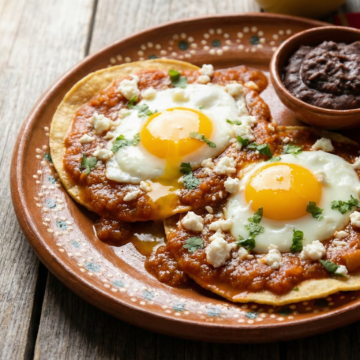
Place one or two fried tortillas on each plate, overlapping slightly. Spoon a generous amount of warm salsa ranchera over the tortillas. Place the fried eggs on top. Spoon more sauce around the eggs.
Top with crumbled queso fresco, fresh cilantro, and any other desired toppings. Serve immediately with refried beans on the side and extra warm tortillas for scooping.
The Salsa Ranchera Makes or Breaks the Dish
Salsa ranchera is not salsa in the chip-dipping sense. It is a cooked sauce with deep, complex flavor that develops through charring, blending, and simmering. Each step matters.
Charring the tomatoes and onions triggers the Maillard reaction, creating caramelized sugars and new flavor compounds that add sweetness and depth. Raw tomatoes produce a sauce that tastes flat by comparison. Take the time to get real char marks, not just softened vegetables.
The dried chiles contribute more than heat. Guajillo chiles add fruity, slightly tangy notes and the characteristic red-orange color. Ancho chiles bring smokiness and richness. Together they create a more complex sauce than either would alone. If you can only find one variety, guajillo is the better choice for this dish.
Frying the blended sauce in hot oil is a technique common in Mexican cooking called "frying the salsa." The hot oil cooks the sauce quickly, concentrating flavors and removing the raw taste. Skipping this step produces a sauce that tastes like blended vegetables rather than something that has been cooked.
Simmering allows the flavors to meld and the sauce to thicken to the right consistency. A thin, watery sauce runs off the eggs and pools on the plate. A properly simmered sauce clings to the eggs and tortillas, delivering flavor in every bite.
What to Serve with Huevos Rancheros
Huevos rancheros is traditionally a complete breakfast, but you can build around it:
- Refried beans (essential, not optional)
- Mexican rice
- Sliced avocado or guacamole
- Fresh fruit (papaya, mango, or melon)
- Extra warm corn tortillas
Beverage pairings:
- Mexican coffee (café de olla)
- Fresh-squeezed orange juice
- Agua fresca (jamaica, horchata, or tamarindo)
- Michelada for a brunch occasion
For dietary modifications:
- Vegetarian: Use vegetable broth in the sauce. The dish is already vegetarian.
- Vegan: Replace the eggs with seasoned tofu scramble or fried plantains. Skip the queso fresco and crema.
- Gluten-free: The dish is naturally gluten-free when using corn tortillas. Check broth labels.
- Dairy-free: Omit queso fresco and crema, or use dairy-free alternatives.
Tips for Success
- Char the vegetables properly. Blackened spots create flavor. Pale, barely roasted tomatoes make a flat-tasting sauce.
- Do not skip soaking the chiles. Dried chiles need rehydration to blend smoothly. Fifteen minutes minimum.
- Fry the sauce in hot oil. This step transforms the raw blended mixture into a cooked sauce. Listen for the sizzle.
- Keep egg yolks runny. The liquid yolk mixing with the sauce is part of the experience. Overcooked yolks change the dish.
- Fry tortillas until crisp at the edges. Soft tortillas turn soggy under the sauce. A light fry adds texture and corn flavor.
- Serve immediately. Huevos rancheros do not hold well. The tortillas soften, the eggs overcook from residual heat. Eat right away.
Substitutions
- Guajillo chiles: New Mexico chiles or California chiles are similar. In a pinch, use 1 tablespoon of good-quality chili powder, though the flavor will differ.
- Ancho chiles: Pasilla or mulato chiles work. Or use all guajillo.
- Roma tomatoes: Any ripe tomatoes work. Canned fire-roasted tomatoes can substitute if fresh are unavailable.
- Queso fresco: Feta cheese (rinsed to reduce salt) or cotija cheese.
- Mexican crema: Sour cream thinned with a little milk or lime juice.
- Lard: Vegetable oil, avocado oil, or bacon fat.
- Fresh tortillas: Store-bought corn tortillas work. Avoid flour tortillas for authenticity, though they can substitute.
Variations
- Huevos divorciados: "Divorced eggs" with one egg topped with salsa ranchera (red) and one with salsa verde (green), separated by refried beans.
- Huevos rancheros with chorizo: Crumble and cook Mexican chorizo, then nestle the eggs into the meat before adding sauce.
- Huevos ahogados: "Drowned eggs" poached directly in the simmering salsa ranchera.
- Chilaquiles style: Cut tortillas into triangles, fry until crisp, then toss with the sauce and top with eggs.
- Baked version: Pour sauce into a baking dish, crack eggs into the sauce, and bake at 375°F until whites are set.
- Extra spicy: Add a dried chile de árbol or chipotle pepper to the sauce for significant heat.
Make Ahead and Storage
- Salsa ranchera: Make up to 5 days ahead. Store in an airtight container in the refrigerator. Reheat gently before serving. The sauce also freezes well for up to 3 months.
- Refried beans: Make up to 4 days ahead or use homemade beans from the freezer.
- Prep vegetables: Char tomatoes, onions, and garlic up to 2 days ahead. Refrigerate until ready to blend.
- Tortillas and eggs: Must be prepared fresh just before serving. They do not hold or reheat well.
- Assembled dish: Does not store. Huevos rancheros should be eaten immediately after plating.
A Breakfast Worth the Effort
Huevos rancheros requires a few more steps than scrambled eggs and toast, but none of them are difficult. The sauce can be made days ahead, leaving only the tortilla frying and egg cooking for the morning. Twenty minutes of active work produces a breakfast that feels like an occasion.
Make this on a weekend when you have time to sit down and eat properly. The runny yolks, the smoky sauce, the crispy tortillas underneath. It is a meal that rewards attention. Once you have tasted the real version, the brunch spot imitations will never be enough.
📖 Recipe
Authentic Huevos Rancheros
Equipment
- Blender
- Cast iron skillet or heavy pan
- Medium saucepan
- Baking sheet (for broiler method)
Ingredients
For the Salsa Ranchera
- 4 Roma tomatoes
- 3 dried guajillo chiles stemmed and seeded
- 1 dried ancho chile stemmed and seeded, optional
- ½ white onion
- 3 cloves garlic unpeeled for charring
- ½ teaspoon cumin
- ½ cup chicken or vegetable broth
- 1 tablespoon vegetable oil for frying the sauce
- salt to taste
For Assembly
- 8 corn tortillas
- 8 eggs
- vegetable oil for frying tortillas and eggs
For Topping
- ½ cup queso fresco crumbled
- fresh cilantro chopped
- refried beans for serving
- avocado slices optional
- Mexican crema optional
Instructions
Prepare the Chiles
- Remove stems and seeds from guajillo and ancho chiles. Toast in a dry skillet over medium heat for about 30 seconds per side until fragrant and pliable. Do not burn.
- Place toasted chiles in a bowl and cover with hot water. Soak for 15-20 minutes until softened. Drain, reserving some soaking liquid.
Make the Salsa Ranchera
- While chiles soak, char the tomatoes, onion half, and unpeeled garlic cloves under a broiler or in a dry cast iron skillet until blackened in spots, 8-12 minutes. Turn occasionally.
- Peel the garlic. Add charred vegetables to a blender with drained chiles, cumin, salt, and ½ cup broth. Blend until smooth.
- Heat 1 tablespoon oil in a saucepan over medium-high heat. Carefully pour in the blended sauce (it will splatter). Reduce heat to medium-low and simmer 10-15 minutes until thickened. Taste and adjust salt. Keep warm.
Fry Tortillas and Eggs
- Pour ¼ inch of oil into a skillet over medium-high heat. Fry each tortilla for 30-45 seconds per side until lightly golden and slightly crisp at the edges. Drain on paper towels.
- Reduce heat to medium-low. Add more oil if needed. Fry eggs sunny-side up or over-easy until whites are set but yolks remain runny, 3-4 minutes. Season with salt.
Assemble and Serve
- Place 2 fried tortillas on each plate, overlapping slightly. Spoon warm salsa ranchera generously over the tortillas.
- Place fried eggs on top. Spoon more sauce around the eggs. Top with crumbled queso fresco and fresh cilantro.
- Serve immediately with refried beans on the side, sliced avocado, and Mexican crema if desired.



Comments
No Comments