
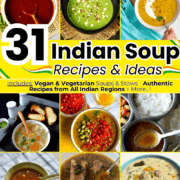
I've always believed that soups tell stories better than almost any other dish, and Indian soups?
They're practically novels in a bowl!
My fascination with Indian soups began during a chilly winter evening when a friend served me a steaming cup of pepper rasam that cleared my sinuses and warmed my soul. That first spoonful sparked a culinary adventure I've been on ever since!
From the medicinal magic of South Indian rasam to the royal richness of Mughal shorba, Indian soups are a stunning tapestry of flavors, textures, and healing traditions.
Jump to:
Each region contributes its unique ingredients and techniques, creating an incredible diversity that I'm excited to share with you.
Whether you're seeking comfort, healing, or simply delicious flavors, there's an Indian soup waiting to transform your dinner table.
Let's dive in!
South Indian Soups
1. Milagu Rasam (Pepper Rasam)
A spicy Tamil Nadu–style rasam, or thin broth, made with freshly ground black pepper, cumin, garlic, and tamarind.
Pepper rasam is a traditional South Indian soup known for its bold, warming flavor and medicinal qualities – it's often sipped hot as a home remedy for colds and coughs.
Light and tangy, with a tempering of mustard seeds and curry leaves, this comforting soup is usually served over rice or savored on its own in a bowl.
2. Beetroot Rasam (South Indian Beet Soup)
A creative twist on traditional rasam, using beets for a stunning color and subtle sweetness.
This beetroot rasam blends pureed cooked beets with the classic South Indian spices (curry leaves, mustard, pepper, garlic, etc.) to create a soup that's similar in texture to borscht but bursting with Indian flavors.
The result is a spicy, garlicky, tangy, and gingery broth with an eye-catching ruby red hue. It's vegan and gluten-free, often served as a hot soup to warm you up in winter, and can double as a light curry over rice.
The flavor gamut is unique – slightly sweet from beets yet "sizzling" with traditional rasam spices.
3. Mango Rasam (Raw Mango Soup)
A tangy-sweet raw mango rasam that showcases India's love affair with mangoes. This South Indian soup (also called maavina saar or mamidikaya charu) is made by simmering green mango pulp with tomatoes, cumin, chili, and a touch of jaggery (unrefined cane sugar).
The result is a vibrant broth that balances sourness from the mango with a hint of sweetness and spice. Traditionally prepared during mango season, it's often served over rice, but can be sipped as a lively soup appetizer.
With its tropical tang and light texture, mango rasam offers a refreshing change from the usual rasams and is even served at weddings in some regions (like the Mangalorean appe huli variant).
4. Nandu Rasam (Spicy Crab Soup)
A fiery crab soup from Tamil Nadu, also known as crab rasam. This unique soup is prepared by simmering crab claws in a tamarind-based rasam broth that's loaded with crushed black pepper, cumin, garlic, and curry leaves.
As the crabs cook, their sweet ocean flavor infuses the spicy-tangy soup. Nandu rasam is believed to be a potent natural remedy for cold and congestion – the combination of peppery hot rasam and nutrient-rich crab does wonders for clearing sinuses.
In many coastal homes, after making a crab curry, the leftover claws are set aside to make this rasam the next day. The soup is usually fairly thin, and you might need to crack the crab shells as you sip to get to the meat.
It's zesty, invigorating, and hearty, perfect for seafood lovers who enjoy some spice. Have it on its own as a soup or pour it over rice. Either way, it's a delicacy that brings together the best of land and sea.
5. Naatu Kozhi Rasam (Country Chicken Soup)
A robust chicken rasam from Chettinad, Tamil Nadu – essentially a thin, spicy chicken soup.
Made by pressure-cooking country chicken bones with tomato, onion, and garlic to make a flavorful stock, and then spicing it with a freshly roasted rasam powder (pepper, cumin, coriander, chili), this soup packs a punch.
It's often prepared when someone is under the weather, as the pepper and garlic lend a restorative kick. The broth is clear yet deeply savory from the chicken and spices, and very easy to digest.
Tempered with ghee, mustard seeds, and curry leaves at the end, naatu kozhi soup is served hot as an appetizer or home remedy.
It's a very simple, homestyle soup that highlights how a few spices and ingredients can yield tremendous flavor in South Indian cooking.
6. Sambar (South Indian Lentil & Vegetable Stew)
No list of Indian soups is complete without sambar, the hearty lentil and vegetable stew that's a staple in South India.
While usually eaten with idli, dosa, or rice, sambar can double as a soup because it's so comforting.
Made with toor dal (pigeon peas) cooked till soft, tamarind for tanginess, and a variety of veggies (drumstick, pumpkin, okra, eggplant, etc.) plus the special sambar masala spice mix, sambar is spicy, tangy, and flavorful.
A finishing tempering of mustard seeds and curry leaves in coconut oil gives it an irresistible aroma. It's vegan and gluten-free by nature. Each region (and household) has slight variations, but the comforting nature of sambar is universal.
Serve it as a soup and you get a nutritious bowl brimming with lentils and vegetables – indeed a "moreish" preparation that's hard to stop slurping.
North Indian Soups
7. Tamatar Shorba (Indian Spiced Tomato Soup)
A light, spiced tomato soup commonly known as tamatar shorba. This North Indian–style soup is made from pureed tomatoes simmered with aromatics like bay leaf, clove, cinnamon, and garam masala.
Unlike a creamy Western tomato soup, tamatar shorba has a thinner consistency (no heavy cream) and a gentle spice undertone.
It's typically tangy and warming, with just enough Indian spices to complement the tomato without overpowering it. Served hot, this soup is a perfect starter that's both familiar and exotically flavored.
8. Yakhni (Kashmiri Mutton Broth)
A soothing yakhni soup – essentially a fragrant bone broth from Kashmiri cuisine. Yakhni means stock or broth, and this soup is made by slow-simmering bone-in mutton (goat meat) or chicken with aromatics like onions, garlic, ginger, whole spices (cinnamon, cardamom, cloves), and often a touch of yogurt for richness.
The broth that results is wonderfully warming and nourishing, extracting collagen and nutrients from the bones.
Mildly spiced (not a curry), yakhni is cherished as a winter comfort – it's light on the palate yet deeply satisfying.
In Kashmir, mutton yakhni is even part of the traditional wazwan feast (though as a yogurt-based gravy), and as a soup it's enjoyed simply with a squeeze of lemon or as a base for other dishes.
Served hot, a cup of yakhni is perfect to sip on a cold day or when you need a healthy pick-me-up.
9. Nihari (Slow-Cooked Meat Stew)
A legendary meat stew that originated in the Mughal kitchens – nihari is a rich, spice-laden broth traditionally slow-cooked overnight.
This recipe uses tender mutton (or beef) shanks braised for hours with browned onions, ginger-garlic, and a special nihari masala, resulting in ultra-soft meat and a luscious gravy.
Nihari is infused with warming spices like cardamom, cloves, cinnamon, and chile, and often thickened slightly with atta (whole wheat flour) for body.
The name "nihari" comes from Nahar (morning), as it was originally eaten at dawn – and indeed it makes a hearty breakfast stew with naan.
The dish is popular in Old Delhi, Lucknow, and across Pakistan. When served, it's garnished with fresh ginger, cilantro, green chilies and a squeeze of lime.
Deeply flavorful and slow-cooked to perfection, nihari is the ultimate winter comfort soup for meat lovers.
10. Paya Shorba (Lamb Trotter Soup)
A gelatinous, slow-cooked trotter soup famous in Punjabi and Mughalai cuisine. Paya means feet, and this shorba (broth) is made by simmering lamb or goat trotters (hooves) for hours until the collagen and marrow dissolve into a rich, sticky broth.
The stew is spiced with warming whole spices and aromatics, yielding a rich, savory soup that's considered a delicacy. Paya shorba is prized for its health benefits – full of gelatin, it's great for joints and often given to those recovering from illness.
It's a popular breakfast in parts of North India and Pakistan (e.g., enjoyed with naan in Punjab).
The texture is thick and hearty, and it's served piping hot garnished with slivers of ginger, fresh chilies, and a squeeze of lemon.
This dish is truly comfort food, with a deep meaty flavor and body-warming goodness.
11. Badam Shorba (Creamy Almond Soup)
A rich, velvety almond soup that hails from royal kitchens. Badam shorba is prepared by blending soaked almonds into a paste and cooking it with milk or broth, plus mild spices.
This recipe also includes a mix of finely chopped vegetables (like carrots, beans, peas, corn) to make it more substantial.
Despite its creamy texture, it's actually quite healthy – completely vegan in this version (using no cream, just almonds for creaminess).
The soup is lightly spiced with pepper and cumin and often finished with a drizzle of chili oil for contrast.
Almonds are packed with nutrients, so this badam shorba is both nourishing and indulgent. It's typically served as an appetizer in Nizami or Mughlai cuisine, showcasing that not all creamy soups are heavy – this one is an exception, being nutritious as well as delicious.
12. Dal Shorba (Indian Lentil Soup)
A wholesome dal soup that's both delicious and nutritious. Dal shorba is essentially a thin lentil soup made most commonly with yellow split lentils (toor dal) cooked until soft and then blended with Indian spices.
This recipe is vegan and gluten-free, featuring a comforting broth spiced with cumin, garlic, turmeric, and garnished with fresh cilantro.
It's ready in about 30 minutes yet tastes like a long-simmered soup, making it perfect for chilly days or light dinners.
The texture is smooth (often strained or pureed) and it has a mild aromatic flavor that even kids enjoy.
Dal shorba showcases how lentils – a staple in Indian cuisine – can be presented as a subtle, soothing soup course rather than the thicker curries (dals) they usually form.
Coastal & Regional Soups
13. Kerala Chicken Stew (Ishtu)
A mild, creamy chicken stew from Kerala that's traditionally served with appam (rice hoppers).
This dish consists of chicken pieces and vegetables (like potatoes, carrots, green beans) gently cooked in silky coconut milk with just a few whole spices (cardamom, cinnamon, cloves) and curry leaves.
The stew is seasoned with a little ginger, garlic, and green chili, but nothing overpowering.
The result is a stew that is pale white, dotted with tender chicken and veggies, and supremely fragrant. It's amazing how such simple ingredients create pure elegance on the palate.
Kerala stew isn't fiery or thick; it's subtle, soupy, and rich from the coconut milk. This recipe is often made for special breakfasts or dinners and is a prime example of the fusion of flavor and finesse in Kerala's Syrian-Christian cuisine.
14. Sol Kadhi (Kokum & Coconut Soup)
A refreshing Konkan soup-drink made from kokum (a sour plum-like fruit) and coconut milk. Sol Kadhi is served chilled and pink in color – kokum petals tint the coconut milk a lovely hue.
It's popular in coastal Maharashtra and Goa as a digestive cooler after spicy meals. This "soup" is not spicy; it's tangy from the kokum and creamy from the coconut, often infused with crushed garlic and green chili for a mild kick.
Traditionally, sol kadhi is enjoyed in hot summers to cool the body. It's quick to make with just soaked kokum, coconut milk, garlic, chili, and salt whisked together.
Sipped in small bowls or glasses, sol kadhi serves as the perfect palate cleanser – light, acidic, and soothing.
It's an acquired taste if you're new to kokum, but once you acquire it, this pretty pink soup can be quite addictive.
15. Gujarati Kadhi (Sweet Yogurt Soup)
A gentle, sweet-and-sour yogurt soup from Gujarat called kadhi. This dish is made from buttermilk or yogurt thinned with water and thickened with a bit of besan (gram flour) while being simmered with spices.
Gujarati kadhi has a distinctive slightly sweet taste – achieved by adding a bit of sugar or jaggery – balancing the tang of the yogurt.
It's seasoned with a fragrant tempering of ghee, mustard seeds, cumin, curry leaves, dried red chilies, and ginger, but it's not meant to be spicy-hot.
The texture is silky and smooth, fairly thin. Kadhi is often served with khichdi or steamed rice as a comfort meal, especially in the summer. It's light, soothing, and easy to digest, with the yogurt providing a cooling effect.
Every region of India has its kadhi, but the Gujarati version is notable for its mellow sweetness and ultra-creamy consistency, making it beloved even by those who normally don't enjoy yogurt. It's truly "heart warming" in its simplicity.
16. Dalma (Odisha Lentil-Vegetable Stew)
A signature dish from Odisha, Dalma is a wholesome lentil and vegetable stew that's a temple food and comfort food all in one.
Yellow lentils (usually arhar dal) are cooked with an array of vegetables – commonly pumpkin, potato, eggplant, drumstick, green banana, and others – along with turmeric and a touch of ghee.
What sets dalma apart is its finishing touch: a fragrant tempering (chhonk) of panch phoron (a blend of cumin, mustard, fenugreek, nigella, fennel seeds) fried in ghee, which is poured over the cooked dal.
The stew is moderately thick, chunky with veggies, and mildly spiced (not hot). It's traditionally served with rice and is a staple at Odisha's Jagannath Temple (as part of the holy Mahaprasad).
The layers of flavor – from the soft lentils to the hearty veggies and aromatic ghee-roasted spices – are fantastic. Dalma is simple, nutritious, and deeply satisfying, truly "the best lentil stew you will eat" as one Odia blogger proudly claims.
17. Thukpa (Tibetan-Naga Noodle Soup)
A hearty noodle soup originating from Tibet and popular across the Himalayan regions of India (Sikkim, Arunachal, Ladakh, etc.).
Chicken thukpa is a version with shredded chicken, but you'll also find veg thukpa. It features a flavorful broth brimming with noodles, meat, and vegetables like carrots, cabbage, and greens.
The soup is spiced with ginger, garlic, sometimes a dash of fish sauce or soy, and topped with chili oil for heat.
Thukpa is truly a one-bowl meal – a complete dinner in itself with proteins, carbs, and veggies. In the cold Northeast, a steaming bowl of thukpa is the ultimate comfort, warming you up instantly.
Though Thukpa has Tibetan origins, it has found its way into Indian hearts and kitchens, becoming a beloved local dish in places like Arunachal and Darjeeling.
18. Ulava Charu (Horsegram Lentil Soup)
A famous Andhra Pradesh specialty, ulava charu is a thick, dark lentil soup made from horsegram (ulavalu).
Horsegram is a hardy lentil rich in iron and believed to have medicinal properties. To prepare ulava charu, the lentils are slow-cooked for hours until the broth turns a chocolate-brown color, then tempered with spices.
The soup is tangy (from tamarind), spicy, and typically served hot with a dollop of fresh cream or butter stirred in just before serving.
In coastal Andhra, it's often enjoyed poured over rice or as a special dish for festive occasions. Ulava charu exemplifies a rustic, traditional soup that has gained legendary status – it's even packaged and sold commercially because of its demand.
Thick, hearty, and utterly unique in flavor, this horsegram soup is a must-try from Telugu cuisine.
Super-Green Vitality Soups
19. Palak Soup (Indian Spinach Soup)
A vibrant green spinach soup made Indian-style with hints of spice. Fresh palak (spinach) leaves are cooked and pureed into a creamy soup base enriched with a touch of milk or cream.
Warming spices like cinnamon or cumin add depth to the flavor without masking the spinach's earthiness.
This soup is hearty yet healthy – packed with nutrients from the leafy greens – and is often enjoyed with a piece of crusty bread or toast.
It's kid-friendly and a great way to sneak more greens into a meal, with a beautiful color and mild, flavorful taste.
20. Methi Leaves Soup (Fenugreek Soup)
A herbaceous fenugreek leaf soup that is lightly bitter and immensely healthy. Fresh methi leaves (fenugreek greens) are sautéed with garlic, onion, and tomato, then simmered in a thin dal-based broth.
The resulting soup is a good appetizer and is traditionally recommended for lactating mothers due to fenugreek's known benefits in boosting milk production.
Methi is rich in iron, calcium, and fiber, and this soup is an easy way to consume those nutrients. The flavor is unique – slightly bitter (in a pleasant way) which stimulates the appetite, balanced by the acidity of tomato and warmth of black pepper.
It's a satvik (simple) preparation without heavy spices, letting the fenugreek's medicinal qualities shine. A bowl of methi patta soup is both nourishing and soothing, especially when you want a light, detoxifying start to your meal.
21. Drumstick Leaves Soup (Murungai Keerai)
A power-packed moringa leaf soup made from drumstick tree leaves – often called a "miracle tree" for its health benefits.
Drumstick (moringa) leaves are cooked with spices, shallots, and garlic into a simple broth that is unbelievably nutritious.
Moringa leaves contain over 90 nutrients and many antioxidants, and this soup is touted to boost immunity and even help as an anti-inflammatory and anticancer tonic.
Despite its healthfulness, the soup is quite tasty: the tiny leaves impart an earthy, spinach-like flavor, and a tempering of cumin, mustard, and curry leaves adds aroma.
Traditionally, this soup is given to new mothers (as it's said to increase breast milk production) and anyone needing a strength boost. It's easy to prepare and epitomizes the concept of food as medicine in Indian cuisine.
Indo-Chinese Crowd-Pleasers
22. Sweet Corn Vegetable Soup
A classic Indo-Chinese soup featuring sweet corn kernels and mixed veggies in a mild, comforting broth.
Sweet corn vegetable soup is hugely popular in India's Chinese restaurants – it's mild in taste, thickened slightly with corn starch, and seasoned with just salt, white pepper, and a dash of soy if desired.
This version is loaded with chopped carrots, beans, cauliflower, peas, and of course sweet corn, making it nutritious as well as delicious.
Served steaming hot, it's often customized at the table with a splash of soy sauce, vinegar, or chili sauce to one's liking.
A perfect starter, especially loved by kids and those who prefer less spicy soups.
23. Sweet Corn Chicken Soup
The non-vegetarian counterpart to the above, this sweet corn chicken soup is an Indo-Chinese favorite featuring shredded chicken in a velvety corn broth.
It's made by simmering tender chicken pieces (often bone-in for more flavor) in a broth with cream-style corn, egg ribbons (egg drop), and seasonings.
The result is a gently sweet, savory soup with a silky texture, boosted by the aroma of sesame oil and the subtle heat of white pepper.
A few finely chopped veggies like carrot and spring onion may be added for color, but the star is the combination of chicken and corn.
This soup is a staple in Indian Chinese cuisine and is loved for its comforting, restaurant-style taste.
24. Hot and Sour Soup
A Indo-Chinese hot & sour soup that's exactly as its name suggests – spicy and tangy!
This popular soup combines mixed vegetables (mushrooms, cabbage, carrots, etc.) in a flavorful broth seasoned with soy sauce, vinegar, chili paste, garlic, and pepper.
Thickened slightly with cornstarch, it has a pleasing consistency loaded with veggie bits. The heat comes from chilies and white pepper, while the sourness comes from vinegar (often rice vinegar).
It's a restaurant classic in India, often enjoyed steaming hot. Whether made vegetarian or with chicken, hot and sour soup is beloved for opening up the appetite with its punchy, bold flavors.
25. Manchow Soup
A spicy veg Manchow soup, another Indo-Chinese staple known for its dark, rich broth and crispy noodle topping.
This soup is prepared by stir-frying finely chopped vegetables (like bell peppers, carrots, cabbage, mushrooms) and simmering them in a soy- and chili-infused broth thickened with a bit of cornstarch.
What sets manchow apart is the garnish – it's traditionally served with a handful of crunchy fried noodles on top, adding a fun texture to each spoonful.
The flavor is garlic-forward, peppery, and deeply savory (thanks to soy sauce). Popular all over India, veg manchow soup is a go-to order at Chinese eateries and is often enjoyed as a hearty starter or even a light meal in itself.
Modern & Fusion Soups
26. Mulligatawny Soup – Mirchi Tales
A fragrant Anglo-Indian soup whose name literally means "pepper water" in Tamil.
This mulligatawny recipe is vegetarian, featuring red lentils, carrots, potatoes, and curry spices simmered in a rich broth (often finished with coconut milk).
Originating during the British Raj as an adaptation of South Indian rasam, mulligatawny has a creamy, hearty texture and a warming spice profile.
It's a fusion of Indian ingredients (like lentils and garam masala) with a soup concept, resulting in a delicious cross-cultural comfort food.
27. Carrot Ginger Soup
A silky smooth carrot soup enlivened with ginger and a touch of Indian seasoning. This simple soup purées tender carrots with a hint of fresh ginger, yielding a brightly colored, creamy starter.
In India, carrot-ginger soup has gained popularity as a nutritious appetizer, even though soups are not traditionally native to the cuisine.
The ginger adds a warm zing to the naturally sweet carrots, and sometimes a pinch of cumin or coriander is included for extra aroma. Often served without any heavy cream (to suit Indian tastes), it's a light, vegan-friendly soup that's ideal before a meal or on a cool evening.
28. Curried Pumpkin Soup (with Indian Spices)
An autumn favorite given an Indian twist – this curried pumpkin soup roasts pumpkin to bring out its natural sweetness, then blends it with spices and herbs for a flavor-packed bowl.
The soup includes hints of rosemary (used during roasting) and is spiced with garam masala, garlic, and mint, creating a beautiful harmony between Indian and Western flavors.
It's garnished unusually but delightfully with toasted pistachios and pomegranate arils, adding crunch and pops of tartness. The texture is creamy and satisfying.
This soup shows off how Indian cooks play with global ingredients – the humble pumpkin becomes a star when paired with cumin, coriander, and chili in the soup.
Each spoonful is warm, aromatic, and slightly sweet, with the spices lending a cozy depth.
29. Tomato Chickpea Quinoa Soup
A modern fusion soup that combines Indian and global ingredients – tomatoes and carrots form the base, while protein-rich quinoa and chickpeas make it a complete meal.
This hearty soup is loaded with vegetables and flavored with herbs like basil and oregano along with Indian spices and garlic. It's a one-bowl dinner: filling, comforting, and gluten-free.
The soup has a stew-like consistency due to the quinoa and chickpeas, and it's subtly spiced (not overly hot). With tangy tomato and earthy chickpeas, it provides plenty of fiber and protein.
This recipe shows the innovative side of Indian food bloggers – creating healthy, fusion soups that are "super easy to make, full of flavor and loaded with tons of health benefits".
30. Oats Soup (Indian Oatmeal Soup)
A simple, creamy oats soup made the Indian way – great for breakfast or a light meal. Rolled oats are cooked with water or milk, flavored with a bit of onion, garlic, salt and pepper, to create a porridge-like savory soup.
This recipe uses just a few basic ingredients and comes together in minutes, reflecting why many Indians choose oats for a quick breakfast.
It's high in dietary fiber and known to keep one full longer, aiding in weight management. Think of it as the Indian answer to Western cream of oats soups – but lighter, since it typically uses low-fat milk and skips heavy cream.
Sometimes garnished with a pinch of herbs or a drizzle of ghee, oats soup is a healthy start to the day or a warm snack, proving that even something as plain as oats can be made tasty with a desi twist.
31. Indian Vegetable Soup (Clear Veggie Soup)
A light mixed vegetable soup made home-style with a medley of seasonal veggies. This recipe from North India uses ingredients like cauliflower, peas, radish, tomato, and even leafy greens (bathua or spinach) simmered in a clear broth.
With no heavy cream or thickener, the soup highlights the fresh flavor of the vegetables – it's cozy, nourishing, and low in fat.
A simple tempering of garlic, black pepper, and a hint of lemon brings the flavors together. This clear veg soup is often prepared as a healthy starter or a weight-loss friendly meal, since it's filling but very light.
Packed with nutrition and flavor, it's an excellent example of how Indian cooks adapt local produce into global dishes like soup.


Comments
No Comments